Mastering Virtual Drum Set Timing: A Guide to Polyrhythm Practice
Is your virtual drumming timing holding you back? Perfecting your rhythm is the secret weapon that transforms basic beats into professional-sounding drumming. For many drummers, consistent timing is the biggest hurdle. Whether you're struggling to keep a steady beat or want to add complex polyrhythms to your playing, you've come to the right place.
This guide will help you master timing precision, exploring everything from basic subdivisions to mind-bending cross-rhythms. The best part? You can practice every exercise right now with our free interface. Let's dive into the drills that will elevate your virtual drumming skills to the next level.
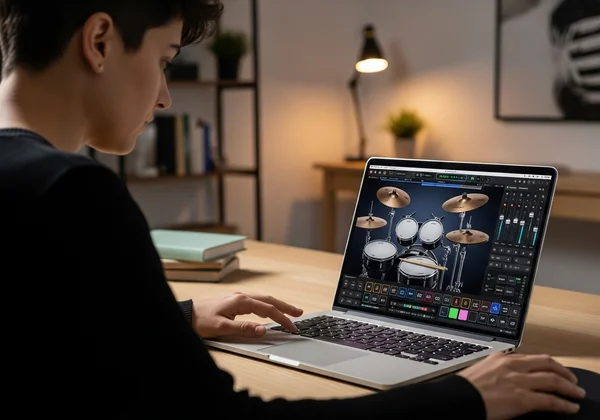
Understanding the Foundation of Drum Timing
Before we can run, we must walk. In drumming, this means building a rock-solid internal clock. Great timing isn't about playing fast; it's about playing with precision and control. These core concepts are the first step toward becoming a drummer that other musicians love to play with.
The Metronome: Your Virtual Drumming Compass
Think of a metronome as your unbreakable, perfectly consistent bandmate. It provides a steady click that serves as the foundation for all your practice. Many drummers initially resist the metronome, but learning to play with one is essential for developing pro-level timing. It exposes your weaknesses and forces you to be honest about your rhythmic accuracy.
Using a metronome with an online tool is easy. While you can't control one directly on our site, you can open a metronome app or website in another tab. Set it to a slow tempo, like 60 beats per minute (BPM). Then, simply try to make your kick or snare drum hit exactly on the click. This simple exercise is the bedrock of all timing practice.
Subdivisions: The Building Blocks of Rhythm
A beat is not just a single point in time; it's a space that can be filled. Subdivisions are the smaller rhythmic units that live inside each beat. The most common ones are quarter notes (one note per beat), eighth notes (two notes per beat), and sixteenth notes (four notes per beat).
Mastering subdivisions means you can move smoothly between different rhythmic "gears." It allows you to create intricate hi-hat patterns or fast, articulate drum fills. On a virtual drum set, you can practice this by playing steady sixteenth notes on your hi-hat key while keeping a simple kick and snare pattern. This builds the coordination needed for complex grooves.
Common Timing Challenges for Virtual Drummers
Playing on a keyboard presents unique challenges. Unlike an acoustic kit, there's no physical rebound to help you. This means your finger muscles must do all the work, which can sometimes lead to rushing or dragging the tempo.
Another common issue is inconsistent velocity. Drummers often unintentionally play some notes louder or softer than others, disrupting the feel. The key is to focus on consistency. Practice patterns where every single note has the same volume and sits perfectly in the rhythmic grid. Using an online drum simulator is a fantastic way to train this precision without disturbing others.
Mastering Subdivisions on Virtual Drums
Now that we understand the basics, let's get practical. The keyboard mapping is designed for intuitive playing, making it the perfect platform for these exercises. Remember to start slowly. Only increase the tempo when you can play the pattern perfectly multiple times in a row.
16th Note Patterns for Keyboard Coordination
Sixteenth notes are the backbone of many funk, rock, and pop grooves. They require your hands to work together in a coordinated way. A great exercise is to play a continuous stream of sixteenth notes, alternating between your hi-hat and snare, while your other hand keeps a simple quarter-note pulse on the kick drum.
Here's a simple pattern to try on our online drum kit:
- Set a metronome to a slow tempo (e.g., 70 BPM).
- Play the kick drum on beats 1, 2, 3, and 4.
- Play sixteenth notes on the hi-hat.
- Replace one hi-hat hit with a snare drum hit, for example, on the "e" of beat 2.
This trains your brain to think in subdivisions and improves your hand-foot coordination on the keyboard.
32nd Note Precision Drills
Ready for a challenge? Thirty-second notes are twice as fast as sixteenth notes, demanding exceptional precision and finger speed. They are often used for quick fills or in fast-paced genres like metal. Trying to play them sloppy will only sound like a mess.
To practice, find a comfortable hand position on your keyboard. Use two fingers on one hand to "roll" on the snare key, trying to get a smooth, even sound. Start at an extremely slow tempo where you can clearly hear each of the eight notes within a single beat. The goal isn't speed; it's clarity and evenness.
Applying Subdivisions to Common Drum Grooves
Theory is useless without application. Let's take the famous "money beat," a simple eighth-note rock groove. Once you have that down, start embellishing it with subdivisions.
Try adding a sixteenth note on the kick drum just before beat 3. This classic funk and rock technique adds drive and excitement. Or, open your hi-hat on the "and" of each beat to create a more dynamic feel. Experimenting with these small changes will transform your basic beats into professional-sounding grooves.
Conquering Polyrhythms on Your Virtual Drum Set
Polyrhythms are where drumming moves from craft to art. A polyrhythm is the layering of two different rhythmic subdivisions at the same time. This creates a fascinating and complex texture. They can sound confusing at first, but you can master them with a systematic approach.
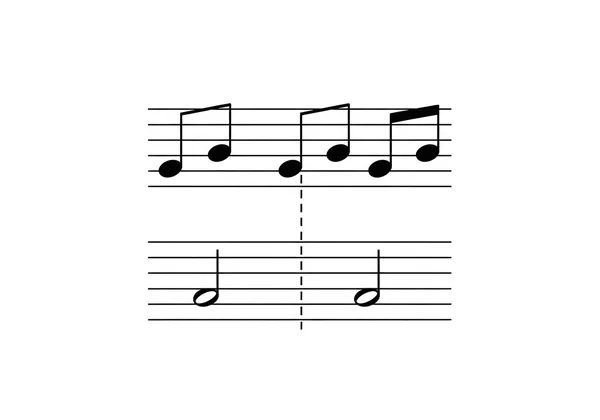
Understanding the 3:2 Polyrhythm
The most common polyrhythm is "three against two" (3:2). This involves playing three evenly spaced notes in the same amount of time it takes to play two. A simple way to feel this is to tap your right hand three times for every two taps of your left hand.
A helpful phrase to learn the feel is "Nice Cup of Tea." Say it evenly over two beats. "Nice" lands on beat 1, "Cup" lands on the "and" of beat 1, and "Tea" lands on the upbeat before beat 2. Try playing this rhythm between your kick drum (playing two beats) and your snare (playing the three-note phrase). It's a fun challenge that will expand your rhythmic vocabulary.
The 4:3 Cross-Rhythm Challenge
The "four against three" (4:3) cross-rhythm is another essential polyrhythm. It's found in everything from African drumming to modern jazz. It involves playing four evenly spaced notes over a pulse of three beats. The mental phrase for this one is "Pass the Golden Butter."
Say "Pass the Golden Butter" evenly over three beats from your metronome.
- "Pass" lands on beat 1.
- "the" lands just after beat 1.
- "Gol-" lands between beats 2 and 3.
- "-den But-" lands on beat 3.
- "-ter" lands just after beat 3.
This is a brain-teaser for sure! Using the free drum machine on our site, you can loop a three-beat phrase and try to layer the four-note pattern on top without a physical kit getting in the way.
Practical Applications of Polyrhythms in Popular Music
You might think polyrhythms are only for experimental jazz, but they are common in popular music. The famous drum intro to "Billie Jean" by Michael Jackson implies a polyrhythmic feel. The band Tool is famous for using complex cross-rhythms. Even Led Zeppelin's "Kashmir" features a powerful polyrhythmic feel between the drums and orchestra. Learning them will open your ears to a new layer of sophistication in the music you love.
Virtual Drum Practice Strategies for Timing Development
Knowing what to practice is one thing. Knowing how to practice is what separates good drummers from great ones. These strategies will help you get the most out of every session with your virtual drum set.
Slow Practice: The Secret to Speed and Accuracy
If you want to play fast, you must practice slow. This is the golden rule of musical practice. When you practice slowly, you give your brain time to process movements and build accurate muscle memory. Rushing through an exercise with mistakes only reinforces those mistakes.
Use a metronome at a "painfully slow" tempo. Focus on making every note perfect. When you can play a pattern flawlessly ten times in a row, only then should you increase the tempo by 2-3 BPM. This patient approach guarantees progress.
Looping Techniques for Complex Rhythms
When you encounter a difficult bar or a complex fill, don't try to play the whole song. Isolate the problem area. Play just that one or two beats over and over again. This is called "looping."
Our virtual drum platform is perfect for this. You can focus entirely on repeating a tricky keyboard fingering without distraction. Loop the challenging part slowly until it feels comfortable and automatic. Then, integrate it back into the full groove.
Recording and Analyzing Your Performance
One of the best ways to check your timing is to record yourself and listen back. You might be surprised by what you hear! What feels "in the pocket" while playing might actually be slightly ahead of or behind the beat.
While our tool doesn't have a built-in recorder, you can use free software on your computer to capture the audio output. Record yourself playing a simple beat to a metronome for one minute. When you listen back, are your snare hits consistently on the beat? This objective feedback is invaluable for honing your internal clock.
Your Rhythmic Journey Begins Now
Timing mastery isn't about reaching a final destination—it's about developing a skill that grows with every practice session. It requires patience, focus, and consistency. From locking in with a metronome to conquering complex polyrhythms, every step builds a more expressive rhythmic foundation. Start small with these exercises. Focus on mastering one concept at a time before moving to the next.
You don't need an expensive, loud acoustic drum set to start. The skills you develop—coordination, precision, and a strong internal clock—are directly transferable. The most important thing is to begin.
Ready to put these techniques into action? Head over to VirtualDrums.org now. Our free, intuitive virtual drum set is the perfect playground to practice your subdivisions, tackle your first polyrhythm, and truly master your timing. Unleash your inner drummer today!

FAQ Section
What metronome tempo should I start with as a beginner?
For absolute beginners, starting between 50 and 70 beats per minute (BPM) is ideal. The goal is to choose a tempo slow enough that you can play the exercise perfectly without feeling rushed. It's better to be perfect at 50 BPM than sloppy at 90 BPM.
Can I really develop proper timing playing drums on a keyboard?
Absolutely. Timing is a mental and muscular skill. Practicing on a keyboard develops the same internal clock, rhythmic understanding, and hand-brain coordination needed for an acoustic kit. Our virtual drums provide instant feedback on your accuracy, making it an excellent tool for timing development.
How long does it typically take to master polyrhythms on virtual drums?
This varies greatly from person to person. A basic 3:2 polyrhythm might click in an afternoon. A more complex 4:3 rhythm could take weeks of consistent, slow practice to feel natural. The key is patience and focusing on the process, not the timeline.
Are there any specific virtual drum settings that help with timing practice?
While our tool is designed for simplicity, the most helpful "setting" is your approach. Use the "Show Key" feature to ensure you're hitting the correct drums. More importantly, use an external metronome app or website alongside our virtual kit to provide a steady timing reference for all your exercises.
How does timing on virtual drums translate to acoustic drums?
The core skill of timing is 100% transferable. Your internal clock and knowledge of rhythm don't care if you're hitting a key or a physical drum. You will need to adapt to the physical rebound of an acoustic set, but the fundamental sense of time you build on our platform will give you a massive head start.