Master 7 Essential Drum Rudiments on Your Virtual Drum Set: Keyboard Drumming Basics
Introduction: Unleash Your Inner Drummer: Why Rudiments Are Key to Keyboard Mastery
Have you ever tapped your fingers on a desk, creating a rhythm that just felt right? That's the drummer in you, waiting to be unleashed. Many aspiring musicians dream of playing the drums but are held back by cost, space, or noise. But what if you could start today, right now, with just your keyboard? How can I practice drums without a drum set? The answer lies in mastering the foundational patterns that all great drummers know: drum rudiments. These are the secret building blocks that transform random tapping into powerful, controlled, and creative rhythms. This guide will walk you through seven essential rudiments, perfectly adapted for keyboard drumming on our free virtual drums.
The Secret to Sounding Pro: Beyond Basic Beats
Moving beyond a simple "boom-bap" beat is what separates a beginner from a player who sounds intentional and skilled. Rudiments are the key. They are short, repeatable patterns that build your coordination, speed, and control. Learning them is like learning the alphabet before you write a story; they give you the vocabulary to express any rhythmic idea that comes to your mind. By practicing these fundamentals, you’ll develop the muscle memory in your fingers to play cleaner, faster, and with more confidence.
Your Virtual Drums, Your Practice Pad: Getting Started
The best part? You don’t need a physical drum kit. Our virtual drum set is your 24/7 practice pad, accessible from any device with a browser. Before we dive in, open up our online drum kit in another tab. Click the "Show Key" button to see how the drums and cymbals map to your keyboard. This is your instrument. Get ready to turn your keyboard into a powerhouse of rhythm.
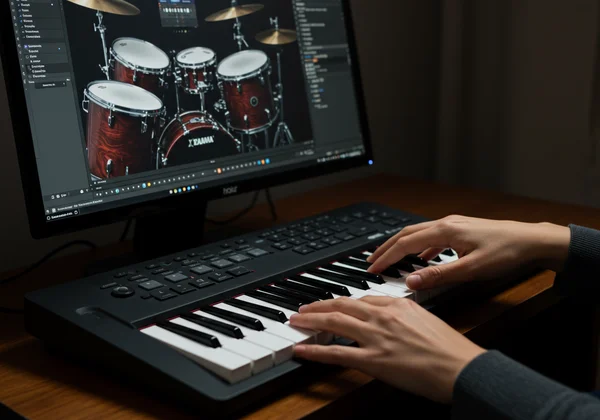
What are Drum Rudiments & Why Master Them for Beginners?
So, what exactly are drum rudiments? Think of them as the fundamental exercises and patterns that form the basis of all drumming. There are officially 40 standard drum rudiments, but you only need a handful to start building a rock-solid foundation. For beginners, they are absolutely essential because they systematically train your hands (or in our case, your fingers) to work together, improving your timing, dynamics, and overall rhythmic precision.
Building Blocks of Rhythm: The Foundation of Drumming Technique
Every complex beat or mind-blowing drum fill you've ever heard can be broken down into a combination of basic rudiments. They are the essential drumming technique that allows for fluid movement around the kit. By mastering these patterns, you are not just learning to play a few beats; you are learning the language of rhythm itself. This foundation will allow you to learn new songs faster, create your own beats, and improvise with ease.
Beyond the Stick: Adapting Rudiments for Keyboard Drumming
While traditionally practiced with sticks, rudiments are just as crucial for keyboard drumming. The principles of timing, control, and pattern recognition remain the same. Instead of wrist and arm control, you’ll be developing finger independence and dexterity. This is a unique skill that translates surprisingly well, building the coordination needed to execute complex patterns on your keyboard drum set. Let’s get started with the most important one.
Essential Keyboard Drum Exercises: The Single Stroke Roll
The Single Stroke Roll is the first rudiment everyone learns, and for good reason. It’s the definition of simplicity and the absolute cornerstone of drumming. The pattern is a steady stream of alternating notes: Right, Left, Right, Left (R-L-R-L). On your keyboard, this could be two different fingers representing your right and left hands, striking different drum pads or the same one repeatedly.
Left-Right-Left-Right: Mastering Evenness and Speed
The goal here is not just speed, but perfect evenness. Each note should have the same volume and the same amount of space between it. Start slowly. Use your index fingers on two keys, like 'j' for the snare and 'f' for another. Tap a steady R-L-R-L pattern. Focus on making the sound consistent. As you get comfortable, gradually increase your speed. This exercise is the ultimate workout for building control.
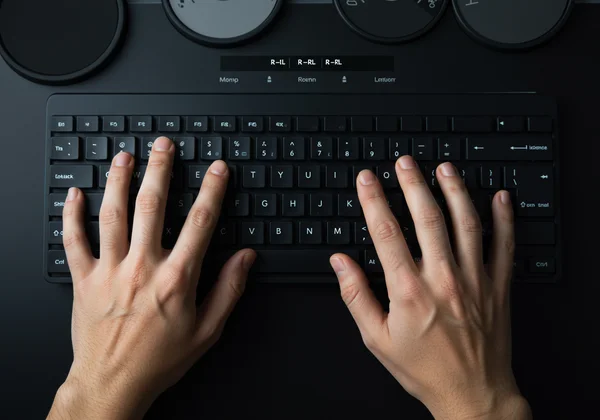
Virtual Drum Practice Tips for Perfecting Your Singles
Use our online practice pad to your advantage. Start by playing single strokes on the snare drum (key: 'j' or 'k'). Try to make them sound like a machine—perfectly in time. Once you’re comfortable, start moving the pattern around the kit. Try playing four notes on the snare, then four on the high-hat ('i' or 'u'), then four on a tom. This simple exercise dramatically improves your ability to move around the virtual kit smoothly.
Enhance Your Virtual Drum Practice: The Double Stroke Roll
Next up is the Double Stroke Roll, a pattern that adds a new layer of finesse to your playing. The pattern is two strokes with one hand, followed by two with the other: Right-Right, Left-Left (R-R-L-L). This rudiment is what allows drummers to play incredibly fast and smooth-sounding rolls.
The Bounce Technique: Getting Two Notes from One Finger
On a real drum, players use the rebound of the stick to get the second note. On a keyboard, we have to think a little differently. The key is quick, controlled finger movement. Think of it as a rapid "double-tap" with the same finger. Practice pressing the snare key ('j') twice in quick succession, followed by the hi-hat key ('i') twice. The goal is to make the two notes sound as even as the single strokes you just mastered. It's a challenge, but it’s a game-changer for your finger dexterity.
Developing Finger Dexterity on Online Drums
Practicing double strokes is one of the best ways to improve your speed and control on online drums. It trains your fingers to be more agile and independent. Start slowly, focusing on the timing of the R-R-L-L pattern. A great exercise is to alternate between a bar of single strokes and a bar of double strokes. This will highlight the difference in feel and help you develop the muscle memory to switch between them seamlessly.
Boost Your Drumming Coordination with Paradiddles
The paradiddle is where things get really interesting. It’s a four-note pattern that combines single and double strokes: Right-Left-Right-Right, Left-Right-Left-Left (R-L-R-R, L-R-L-L). This rudiment is a coordination powerhouse. It forces your brain and fingers to work together in a more complex way, and it’s the secret behind thousands of awesome drum grooves and fills.
Left-Right-Left-Left: Unpacking the Paradiddle for Keyboard Players
Let's break it down for your keyboard. Assign 'j' as your "Right" hand and 'f' as your "Left" hand. The pattern becomes: J-F-J-J, then F-J-F-F. Say it out loud as you play it: "Pa-ra-did-dle." The "did-dle" is the double stroke. This pattern is fantastic for creating interesting rhythms because the "accent" or strongest beat naturally falls in different places.
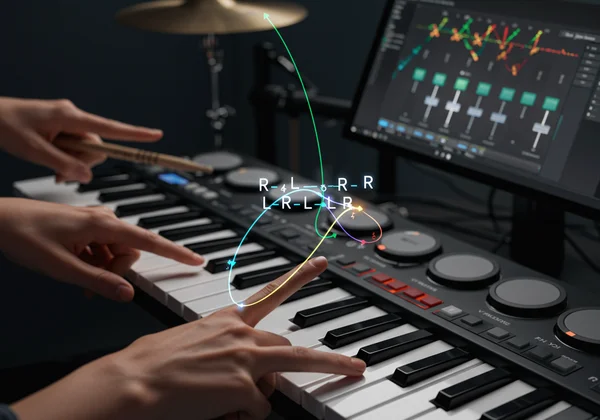
Applying Paradiddles: Beyond Practice to Creative Beats
Once you're comfortable with the basic paradiddle, the fun begins. Try playing the "Right" hand notes on the floor tom and the "Left" hand notes on the snare. Or put the single strokes on the hi-hat and the doubles on the snare. You'll be amazed at the cool, funky beats you can create with this one simple pattern. This is how you move from exercises to actual beat creation.
Unlock More Rudiments for Your Virtual Drum Set
Once you have the singles, doubles, and paradiddles down, you’re ready to add more texture and flair to your playing. Here are a few more rudiments to explore on your virtual drum set.
The Flam & Drag: Adding Nuance to Your Keyboard Drumming
A Flam is when you play two notes almost at the same time, with one being a soft "grace note" just before the main beat. On a keyboard, try hitting the snare key with one finger just a millisecond before hitting it with another. It creates a thicker, broader sound. A Drag is similar, but with two grace notes (l-l-R or r-r-L). These rudiments add a human feel and nuance to your playing.
Rolls & Ruffs: Expanding Your Rhythmic Vocabulary
Finally, spend time with different Rolls & Ruffs. A 5-Stroke Roll, for example, is just two doubles and a single (R-R-L-L-R). These are the building blocks for drum fills. Learning them will expand your rhythmic vocabulary, giving you more creative options when you're jamming along to a song or creating your own beat on our free drumming tool.
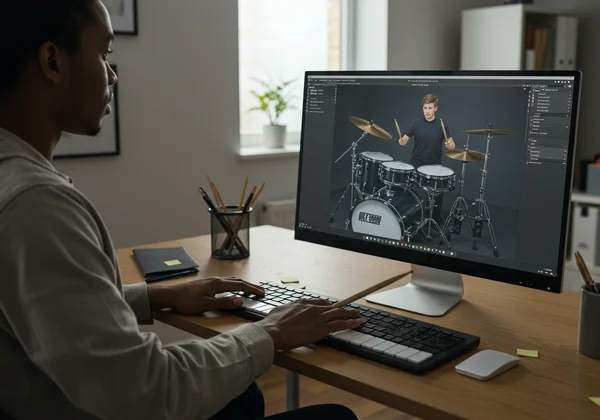
Your Journey to Drumming Mastery Starts Here
You've officially started an incredible drumming journey. Rudiments are not just boring exercises; they are the keys that unlock your rhythmic potential. By practicing the Single Stroke Roll, Double Stroke Roll, Paradiddle, and more, you are building the core skills needed to play with speed, precision, and creativity. The best part is that you can do it all without spending a dime or bothering your neighbors.
Keep Practicing, Keep Playing!
Just like any skill, consistent practice is key. Spend just 10-15 minutes a day working on these patterns. You will be shocked at how quickly your coordination and confidence grow. Remember, the goal is to have fun and enjoy the process of making music. Unleash your inner drummer and experience the joy of playing anytime, anywhere.
Start Your Next Rudiment Session on Our Virtual Drums
There’s no better time to start than now. All the theory in the world can't replace hands-on practice. Head over to VirtualDrums.org, pull up the virtual kit, and start working on your single strokes. With consistent practice, the rhythm you hear in your head will soon be flowing effortlessly through your fingertips on the virtual kit.
Frequently Asked Questions About Keyboard Drum Rudiments
How can I practice drums without a drum set?
The best way is by using a high-quality online tool. A virtual drum set like the one on our site provides a realistic and accessible platform to practice anytime. It allows you to learn fundamentals like rudiments, coordination, and timing using just your computer keyboard, making it the perfect solution for anyone without a physical kit.
Can you learn drums online effectively with rudiments?
Absolutely. Learning rudiments is about building patterns and muscle memory, which can be done effectively on any responsive surface, including a keyboard. By practicing on our interactive drumming platform, you can develop the core techniques and rhythmic understanding needed to become a proficient drummer, all from the comfort of your home.
Is it too late to learn drum rudiments?
It is never too late to learn a musical skill! Drumming is about rhythm and passion, not age. The beauty of an online platform is that it's a zero-pressure environment. You can learn at your own pace, whether you're 12 or 72. Rudiments are the foundation, and starting with them at any age will set you up for success.
What is the best way to develop drumming coordination on a keyboard?
The best way is through consistent practice of rudiments that specifically challenge your hand-eye-ear coordination. The Paradiddle (R-L-R-R, L-R-L-L) is arguably the most powerful exercise for this. Start slow, focus on clean execution on our online drum platform, and gradually increase speed. This will directly translate to better coordination for playing complex beats and fills.