From Beginner to Band-Ready: Structured Virtual Drum Practice Routines
Ever spend hours on a virtual drum set and still feel like you're stuck in the same spot? You're not alone. So many of us start by just tapping away, hoping to get better, but end up feeling uninspired. Here's the secret: unlocking your potential isn't just about playing more—it's about practicing smarter.
Structured practice routines transform aimless drumming into a clear path toward skill and confidence. They provide a framework that builds muscle memory, sharpens your timing, and makes every single session count. This guide will show you how to build effective practice plans using a powerful and accessible tool: the free online drum set at VirtualDrums.org. Get ready to turn your passion into real progress.

Why Structured Virtual Drum Learning is Your Key to Progress
Hopping on a drum kit without a plan is a blast, but it rarely leads to major improvement. Understanding the difference between random playing and structured learning is the first step toward becoming the drummer you want to be. A solid, well-designed routine is the most efficient way to build your skills.
The Pitfalls of Unplanned Drumming Practice
When you practice without a clear goal, you can easily get caught in common traps that slow you down. Unplanned drumming often means repeating the same simple beats you already know. While it feels comfortable, it holds you back from growing as a musician. This can lead to a frustrating plateau where you feel like you aren't learning anything new.
Without structure, it's also easy to pick up bad habits in your timing or coordination that become much harder to fix later on. Over time, a lack of measurable progress can drain your motivation. You might start to believe that drumming is too difficult or that you just don't have the talent, when all you really needed was a better game plan.
Core Benefits of a Consistent Drum Practice Plan
On the flip side, a consistent practice plan is a total game-changer. It gives you a clear roadmap for what to work on, making sure you cover all the essential skills. By focusing on specific exercises, you build correct muscle memory way faster, making complex rhythms feel natural over time.
A structured routine also lets you see your improvement. When you notice yourself mastering a new beat or playing a fill more smoothly, your confidence soars. This positive feedback loop is incredibly motivating and keeps you coming back for more. Ultimately, a good plan ensures that every minute you spend on your virtual drums directly fuels your goal of becoming a better musician.
Crafting Your Personalized Virtual Drum Practice Plan
Building your own practice plan is easier than you think. It’s all about setting clear goals and dedicating a little time to the different elements of drumming. With a versatile tool like VirtualDrums.org, you have everything you need to build a routine that fits your schedule and ambitions.
Setting Realistic Drumming Goals with VirtualDrums.org
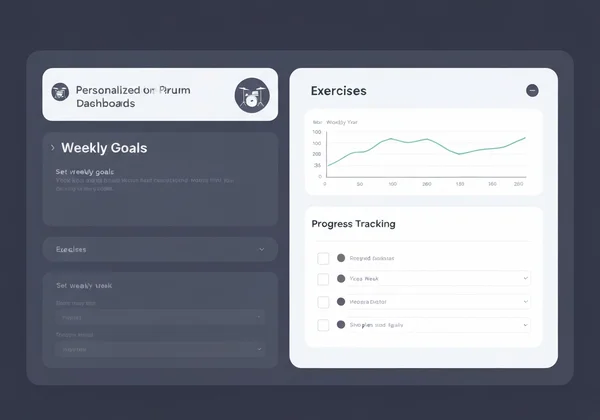
The best practice plans start with clear, achievable goals. Instead of a vague goal like "get good at drums," set specific targets. For example, a great beginner goal could be: "This week, I will learn to play a basic rock beat at 80 beats per minute." An intermediate player might aim to "Master three new drum fills by the end of the month."
Using the virtual drum kit, you can easily work toward these goals. The clean layout and keyboard mapping help you focus on the patterns without distraction. Set a small, manageable goal for each week, and you'll build momentum and see consistent progress that keeps you fired up on your drumming journey.
Essential Elements of an Effective Virtual Drum Routine
A balanced practice session should include a few key components. Think of it like a workout for your brain and hands. A great virtual drum routine can be broken down into four simple parts:
- Warm-ups (5 Minutes): Start with simple, slow patterns to get your fingers and mind ready. Try alternating between your kick, snare, and hi-hat at a relaxed tempo. This prepares you for more complex exercises.
- Technique Drills (10 Minutes): Focus on a specific skill. This could be hand-foot coordination, improving your timing with eighth notes, or practicing single-stroke rolls on the snare.
- Groove Practice (10 Minutes): This is where you work on playing actual beats. Pick a style—rock, funk, or blues—and practice playing it consistently. Try playing along to your favorite songs.
- Creative Play (5 Minutes): End your session with some fun. Improvise, create your own beats, or just play whatever feels good. This keeps drumming enjoyable and helps you develop your unique musical voice.
Step-by-Step Virtual Drum Exercises for Every Skill Level
Whether you're holding drumsticks for the first time or you're a seasoned pro looking for a quiet way to practice, VirtualDrums.org can adapt to your needs. Here are some specific virtual drum exercises you can start with today.
Beginner Coordination Drills on Your Online Drum Kit
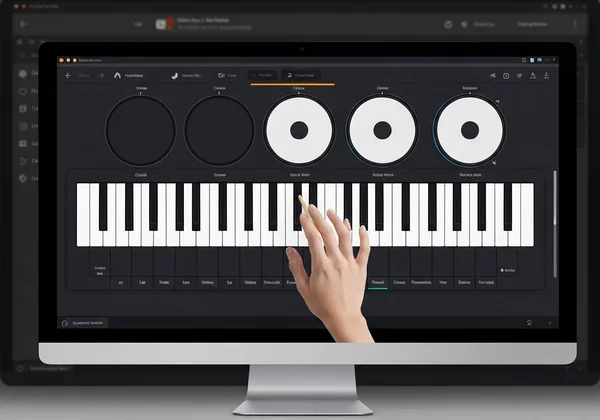
For new drummers, building basic coordination is the most important first step. The goal is to teach your hands and feet to work together. Open the drum simulator and use the "Show Key" feature to see which keyboard keys trigger each drum.
Start with this simple exercise:
- Play the bass drum (kick) on count 1.
- Play the snare drum on count 2.
- Play the bass drum again on count 3.
- Play the snare drum again on count 4. Repeat this "1, 2, 3, 4" pattern slowly until it feels steady. Once you're comfortable, try adding the hi-hat on every single count. This foundational drill builds the core coordination you need for almost every drum beat out there.
Intermediate Groove Development and Drum Fills
Once you're comfortable with basic coordination, you can start developing your grooves. The most famous is the classic rock beat. Using your online drum kit, play the bass drum on counts 1 and 3, and the snare on counts 2 and 4. At the same time, play the hi-hat continuously in eighth notes (1-and-2-and-3-and-4-and).
After you can hold that groove steady for four measures, try adding a simple drum fill. A classic fill is playing four quick notes on the snare drum during the last measure. This practice helps you transition smoothly between keeping time and adding creative fills—a key skill for any drummer.
Advanced Timing and Independence Challenges for Experienced Drummers
For seasoned players, a virtual drum set is perfect for honing advanced skills without making a sound. Challenge your limb independence by creating complex patterns. For example, try playing a samba foot pattern on the kick drum while your hands play a funk groove on the hi-hat and snare.
Another great challenge is working with odd time signatures or polyrhythms. Pull up an external metronome and practice playing a simple 4/4 beat with your hands while tapping a 3/4 pattern with your foot. These exercises push your mental and physical limits, helping you maintain your edge even when you're away from your acoustic kit.
Tracking Your Drum Skill Progression and Staying Motivated
Seeing yourself improve is the ultimate motivation to keep going. Tracking your progress helps you stay fired up and shows you exactly where you need more work. Luckily, there are simple ways to measure how far you've come.
Using the Virtual Drum Metronome for Precision and Tempo Control
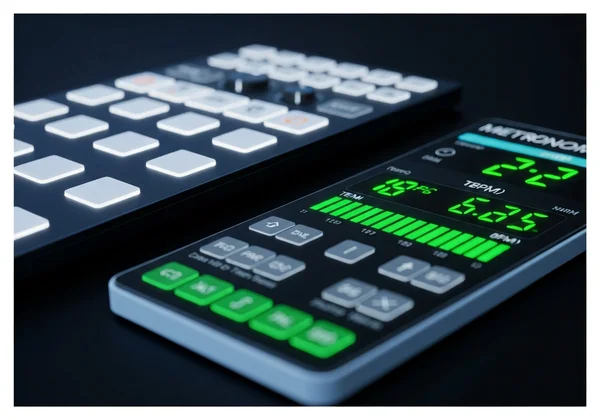
Timing is everything in drumming. A metronome is a drummer's best friend because it gives you an honest, objective measure of your timing. Use an online metronome alongside your practice on VirtualDrums.org. Start new exercises at a slow tempo, like 60 BPM, and only speed up once you can play the pattern perfectly.
Keep a simple practice journal. Write down the date, the exercise you worked on, and the max tempo you could play it cleanly. Watching that tempo number climb over the weeks is one of the most satisfying ways to see your skills grow.
Recording and Reviewing Your Virtual Drum Performances
Hearing yourself play is different from feeling yourself play. Use a free screen recording tool or just your phone to record your practice sessions. When you listen back, you might notice small timing issues or inconsistencies you weren't aware of in the moment.
This kind of self-review is a superpower. It allows you to become your own teacher, spotting your weaknesses and making a plan to fix them. Don't worry about sounding perfect—the goal is to find opportunities for improvement. As you build a library of recordings, you'll have solid proof of how much better you've become.
Overcoming Practice Plateaus and Keeping the Rhythm Alive
Every musician hits a plateau. It's that frustrating point where you feel like you're stuck in neutral. The best way to break through is to change things up. If you've been grinding on rock beats, try learning a simple jazz or Latin groove. The new challenge will fire up different parts of your brain.
Another great strategy is to focus on playing along with music. Find songs with drum parts you admire and try to play along on our online drums. This reminds you why you started in the first place: to connect with the music you love. Remember, the goal is to enjoy the journey.
Ready to Unleash Your Inner Groove?
There's nothing like the raw joy of just hitting the drums to your favorite song. But if you want to transform that energy into real skill and confidence, a structured practice routine is your secret weapon. By setting clear goals, breaking down your sessions, and tracking your progress, you can achieve incredible results. You don't need an expensive drum set or a soundproof room to start—all you need is a plan and the right tool.
With a comprehensive platform that’s free, accessible, and easy to use, there are no more excuses. You have the exercises, the strategies, and the perfect virtual stage to begin.
Ready to transform your drumming? Head over to VirtualDrums.org now, apply these routines, and start your journey from beginner to band-ready today!

Frequently Asked Questions About Virtual Drum Practice
Can you really learn drums online effectively with a virtual drum set?
Yes, absolutely. While a virtual set doesn't replicate the physical feel of sticks, it's an incredibly effective tool for developing the most crucial drumming skills: timing, rhythm, coordination, and limb independence. It's a perfect, no-cost way to build a strong foundation.
How can I practice drums without a physical drum set?
Practicing without a physical kit has never been easier. An online tool like VirtualDrums.org gives you a full drum set right in your browser. It solves the biggest barriers for aspiring drummers—cost, space, and noise—letting you practice anytime, anywhere with just a computer or mobile device.
What are the best daily virtual drum practice routines for beginners?
A great daily routine for a beginner is short and consistent. Aim for 15-20 minutes a day. Spend 5 minutes on simple coordination drills, 10 minutes learning and repeating a basic rock or pop beat, and finish with 5 minutes of creative free play. You can start your daily practice with this simple schedule right now.
Is it too late to start learning drums as an adult?
It is never too late to learn an instrument. Drumming is a fantastic hobby for people of all ages that improves coordination, relieves stress, and is incredibly fun. Adults often bring more focus and discipline to their practice, which can lead to surprisingly fast progress. The most important thing is to start and enjoy the process.